History · the hidden labour of the Viking Age
A Sail Is a Winter of Work
Before a longship could raid anywhere, someone had to spin and weave the wind
Every Viking raid you have ever heard of began long before the ship left the beach, with sheep, spindles, and a loom in the corner of a longhouse. The sail was one of the most expensive things a Norse community could make. Nearly all of that work was done by women, and almost none of it made it into the sagas.
Two hundred kilos of fleece
When the Viking Ship Museum in Roskilde rebuilt the Skuldelev 2 warship as the Sea Stallion from Glendalough, it worked out what a sail in the original materials would take: around 200 kilograms of processed wool or flax, which means the fleece of well over a hundred sheep. Viking sheep, close relatives of today's Nordic short-tailed breeds, had a coarse outer coat that stood up to water and an inner coat that was soft and warm. For sailcloth the long, tough outer hair was sorted out and spun tight.
Spindles, warp stones, and years of hands
All of that wool was spun by hand on drop spindles, into many kilometres of thread. It was then woven on a warp-weighted loom, an upright frame where the vertical threads hung straight, pulled taut by clay or stone loom weights. Archaeologists find those weights by the hundred on Viking Age sites. Estimates for a full-size sail run to many thousands of hours of work, and on some reconstructions to years of one person's labour. The cloth was also dyed. Madder root gave the reds the sagas love, and the finished sail could be dressed with fat and red ochre to seal it against wind and rain.
The first hoist
A sail was made in narrow woven panels and sewn together, then fitted to the yard and rigged. Only then could anyone learn whether all those months of work would hold a real wind. Some modern reconstruction crews have taken the shortcut the Sea Stallion took and fitted a sail of modern cloth, because the original way is so slow. Viking Age communities had no shortcut. Every sail that crossed the North Sea stood for a winter or more of spinning and weaving, measured in sheep, in thread, and in time.
The music it inspired
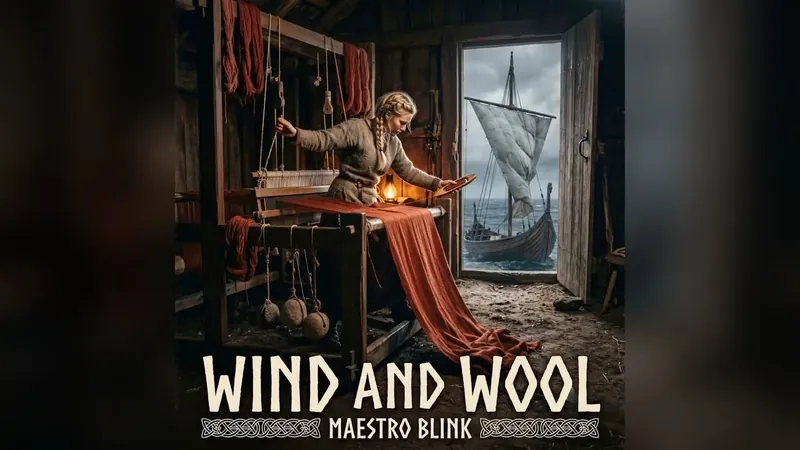
Wind and Wool
Before the sail catches the wind, someone spends a winter making it. Ten instrumental tracks built around the warp-weighted loom, the madder-root dye vat, the first fleece of the season — the quiet, unglamorous labor a longship is actually made of.
Wind and Wool follows one sail through its whole making, one track per stage: “First Fleece,” “Carding Wind,” “Madder Vat,” “Endless Thread,” “Warp Stones,” “Shuttle and Beam,” “Seam by Seam,” “Tallow and Ochre,” “First Hoist,” and finally “Wind and Wool.” Nothing burns and nobody dies. The whole story is in the hands.